As global supply chains upgrade and e-commerce continues its rapid expansion, businesses face increasing demands for efficient warehouse management. As a core component of modern storage systems, selective pallet racking has become the preferred solution for companies looking to improve storage efficiency and optimize space, thanks to its robust structure, high load capacity, and exceptional flexibility.
Selective Pallet Racking: The Backbone of Warehouse Management
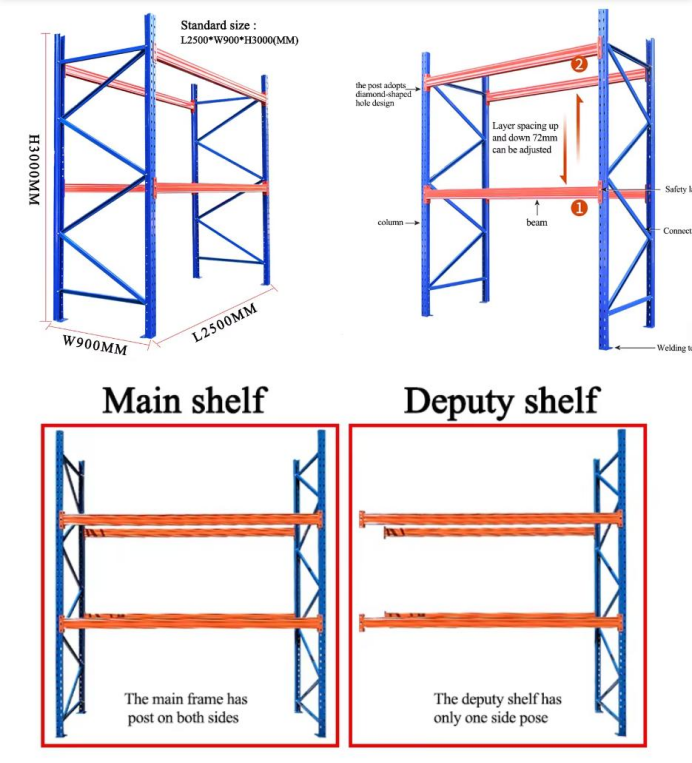
Also known as beam racking, selective pallet racking is one of the most widely used storage systems. Comprising upright frames, beams, and safety locks, its fully bolted design allows for easy installation and reconfiguration. Beam levels can be adjusted in 75mm increments, easily accommodating a wide variety of product sizes.
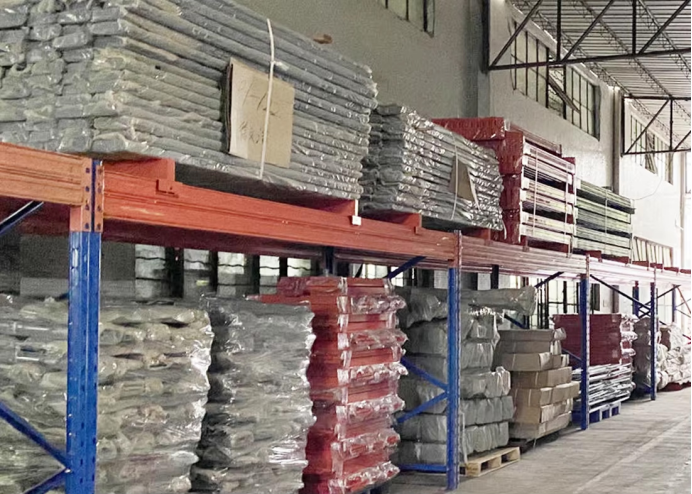
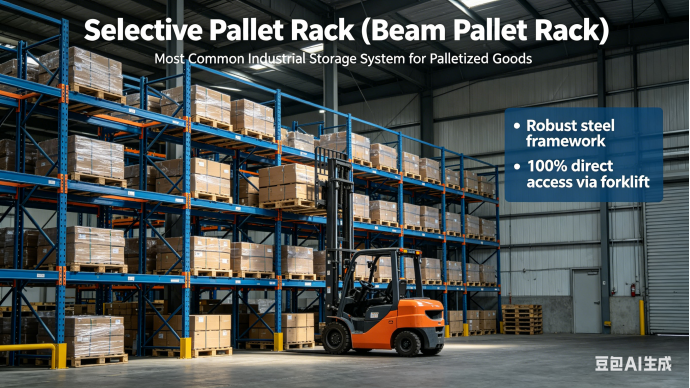
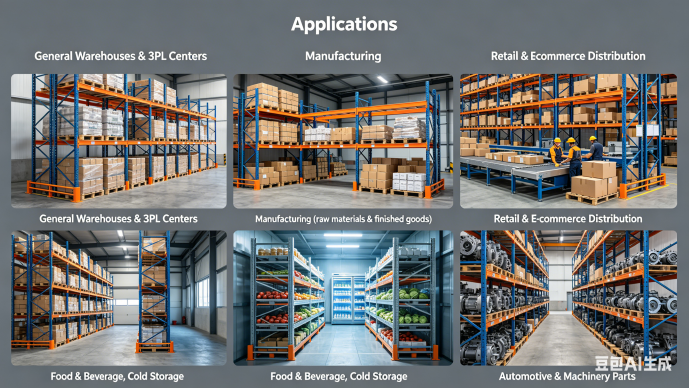
Industry data shows that these racks can support single-layer loads ranging from 500kg to 5,000kg, making them ideal for manufacturing, third-party logistics (3PL), cold storage, and e-commerce fulfillment centers. With 100% direct access to every pallet, forklifts can reach any location instantly, significantly boosting throughput and reducing labor costs.
Rising Demand and Customization Trends
According to 2025 industry data, the domestic heavy-duty racking market has surpassed 48 billion RMB, growing at a CAGR of 9.2%. Driven by its versatility and cost-effectiveness, selective pallet racking continues to see rising adoption in manufacturing and e-commerce.
To meet diverse needs, manufacturers are increasingly offering end-to-end services—from site surveys and custom design to installation and maintenance. Tailored solutions based on warehouse dimensions, cargo types, and forklift operations help businesses maximize storage capacity within limited spaces.
Expert Advice: Safe and Scientific Selection
Experts recommend that buyers focus on the following key metrics when procuring selective pallet racking:
Load Capacity: Choose upright and beam specifications based on pallet weight and storage tiers.
Structural Stability: Verify the moment of inertia of uprights, beam deflection limits, and safety lock configurations.
Surface Treatment: Prioritize products with certified rust, corrosion, and salt-spray resistance.
After-Sales Support: Ensure the supplier offers local installation, regular inspections, and rapid response times.
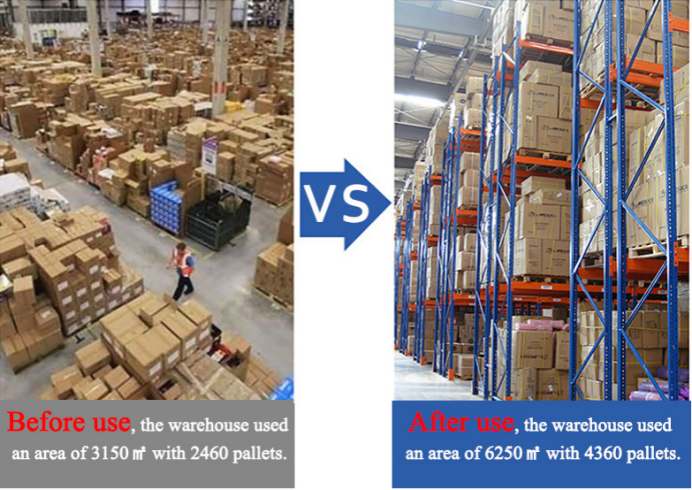

Transform your warehousing logistics operations with Maobang's unbeatable custom storage solutions at factory direct prices. Our expert team will work closely with you every step of the way to ensure your storage space is tailored to your exact needs.
Copyright © Guangzhou Maobang Storage Equipment Co., Ltd. All Rights Reserved - Privacy Policy
 EN
EN
 AR
AR
 FR
FR
 DE
DE
 EL
EL
 IT
IT
 JA
JA
 KO
KO
 PT
PT
 RU
RU
 ES
ES
 SV
SV
 TL
TL
 ID
ID
 VI
VI
 TH
TH
 MS
MS
 HMN
HMN
 KM
KM
 LO
LO
 MR
MR
 TA
TA
 MY
MY
 SD
SD


